Sometimes One Shirt Is Enough
Not every successful fundraising campaign needs a giant online store.
Sometimes there is one cause, one message and one product that brings everything together.
That was the approach behind the Scoliosis Fundraising Store for Joe DiMaggio Children’s Hospital.
The campaign was designed around National Scoliosis Awareness Month and a straightforward idea:
Create a shirt people would want to wear that could simultaneously raise funds and raise awareness.
“We’ve Got Your Back”
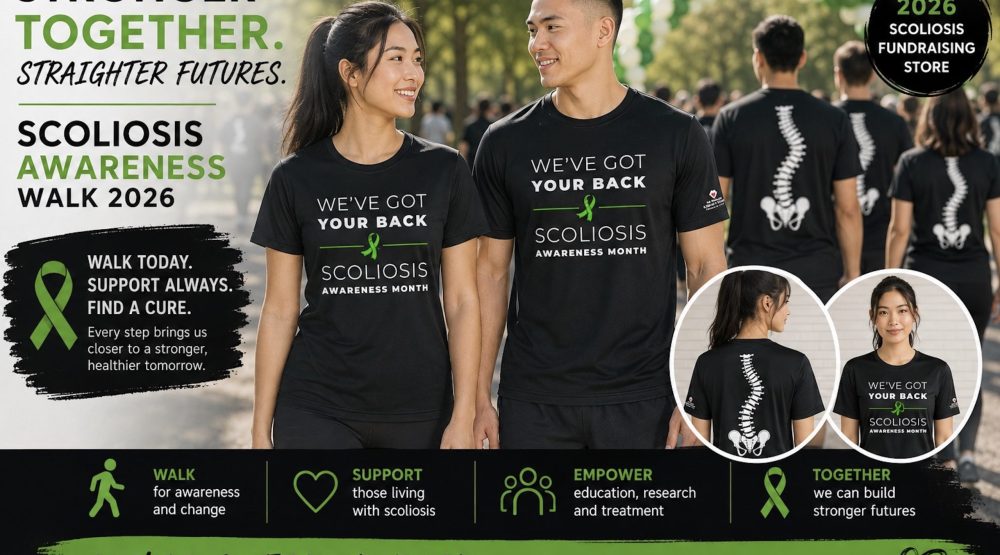
PYRA Promotions built the campaign around a black Sport-Tek® PosiCharge® Competitor™ Tee.
The shirt featured the “We’ve Got Your Back — Scoliosis Awareness Month” message, along with supporting hospital branding and a spine graphic on the back.
There weren’t five different shirts.
There weren’t sweatshirts, hats, bags and tumblers added simply to make the store look bigger.
There was one product connected directly to the message of the campaign.
And people responded.
169 Shirts Put the Message Into the Community
The campaign sold:
169 shirts
Each shirt generated $4.25 toward the fundraiser, resulting in $718.25 in fundraising proceeds before the campaign’s art and setup charges.
After the applicable $45 art charge and five setup charges, the final fundraising contribution was:
$548.25
For a focused, single-product campaign, those numbers are meaningful.
But looking only at the final fundraising amount misses part of what made this campaign valuable.
Fundraising Meets Awareness
A donation can generate money for a cause.
A piece of cause-related apparel can do something else at the same time.
It can start a conversation.
When 169 people purchase and wear a Scoliosis Awareness shirt, the campaign doesn’t end when the online store closes.
Those shirts go into hospitals, homes, events and communities.
People see them.
They see the message.
They ask questions.
And an awareness campaign gains another opportunity to actually create awareness.
That’s why merchandise can be particularly effective for organizations supporting health-related causes.
The product itself becomes part of the campaign.
Keeping Participation Easy
The fundraising store also eliminated many of the manual steps traditionally associated with selling shirts.
Instead of having someone collect names, sizes and payments, supporters could place their orders through the online store.
The program was structured to accommodate orders going to multiple locations as well as individual homes.
That allowed the hospital team to focus on promoting Scoliosis Awareness rather than managing apparel logistics.
And that’s an important distinction.
Fundraising should create resources for an organization.
It shouldn’t consume them.
Bigger Isn’t Always Better
There’s a temptation when building an online fundraising store to keep adding products.
One more shirt.
One more sweatshirt.
Maybe a hat.
Maybe a tumbler.
But the JDCH Scoliosis Awareness campaign demonstrates another approach.
Start with the purpose.
Find the product that supports it.
Create a strong design.
Then make participating incredibly easy.
That’s exactly what happened here.
One product generated 169 individual purchases, more than $700 in fundraising proceeds before applicable art and setup charges, and ultimately $548.25 back to the fundraiser.
More importantly, 169 Scoliosis Awareness shirts went out into the world carrying the message:
We’ve Got Your Back.
For a campaign built around both fundraising and awareness, that’s impact you can see.