Turning Employee Participation Into Fundraising
Employee apparel can be a powerful fundraising tool.
People get something they actually want, the organization creates visibility around an important cause, and every purchase can generate money toward the fundraising goal.
But there’s another side to an apparel fundraiser that isn’t nearly as exciting.
Who collects the orders?
Who keeps track of sizes?
Who processes the payments?
What happens when someone wants a women’s V-neck while someone else wants a men’s long-sleeve shirt?
And once everything is produced, who sorts hundreds of individual orders and gets them where they need to go?
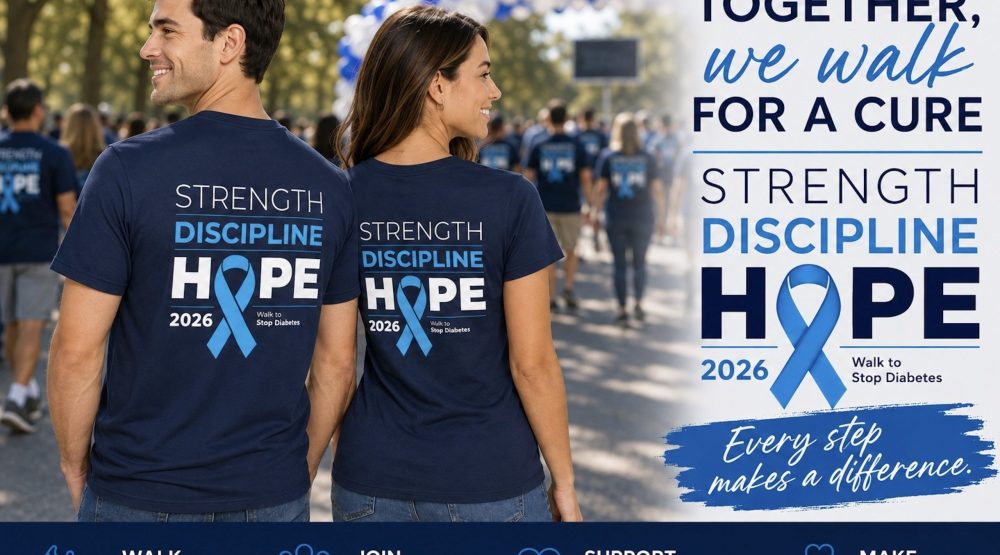
For Memorial Healthcare System’s Walk to Stop Diabetes campaign, PYRA Promotions was brought in to handle that side of the equation.
Building a Store With Choices — Without Making It Complicated
The fundraising store featured four Sport-Tek apparel options:
-
Women’s PosiCharge® Competitor™ V-Neck Tee
-
Women’s Long Sleeve PosiCharge® Competitor™ V-Neck Tee
-
Adult Long Sleeve PosiCharge® Competitor™ Tee
-
Adult PosiCharge® Competitor™ Tee
That gave employees options in both fit and sleeve length without turning the store into an overwhelming merchandise catalog.
The response demonstrated that the variety worked.
The campaign sold 104 women’s short-sleeve V-necks, 116 women’s long-sleeve V-necks, 22 adult long-sleeve tees and 53 adult short-sleeve tees — a total of 295 pieces.
More Than Just Building a Website
Launching an online store is the easy part.
Making the entire program easy for the client is where the real work happens.
The Walk to Stop Diabetes store was designed to accommodate orders going to multiple hospital locations as well as individual homes. That meant Memorial employees could participate regardless of where they worked or how they needed to receive their order.
PYRA managed the program from the merchandise and online ordering side through production and fulfillment.
Instead of Memorial’s internal team receiving hundreds of emails, spreadsheets, payments and size requests, employees placed their own orders directly through the fundraising store.
That distinction matters.
A fundraiser shouldn’t create so much work for an organization that its team thinks twice about ever running another one.
The Results
By the time the campaign closed:
295 apparel items were sold.
Those purchases generated $6,223.50 in total merchandise sales and $1,899.85 in fundraising proceeds before applicable deductions.
After credit-card processing, art and setup charges, the final fundraising contribution was:
$1,669.60
But the value of the campaign extended beyond the fundraising check.
Nearly 300 pieces of Walk to Stop Diabetes apparel went into the community, giving employees and supporters another way to visibly participate in the initiative.
Why This Fundraiser Worked
There wasn’t one magic ingredient.
It was the combination of several simple decisions.
Employees were offered merchandise they could actually use. There was enough variety to give people a choice without overwhelming them. Ordering was handled online. Payments were collected at checkout. And fulfillment was designed around the reality of a healthcare system with people working across multiple locations.
Most importantly, Memorial didn’t have to become an apparel company in order to run an apparel fundraiser.
That’s ultimately what a managed fundraising store should accomplish.
The organization promotes the campaign and rallies its people around the cause.
PYRA handles the merchandise.
For Memorial Healthcare System’s Walk to Stop Diabetes campaign, that formula turned 295 apparel purchases into more than $6,200 in sales, meaningful visibility for the cause and $1,669.60 in final fundraising proceeds.